A timeboxed lit review on the science of meetings

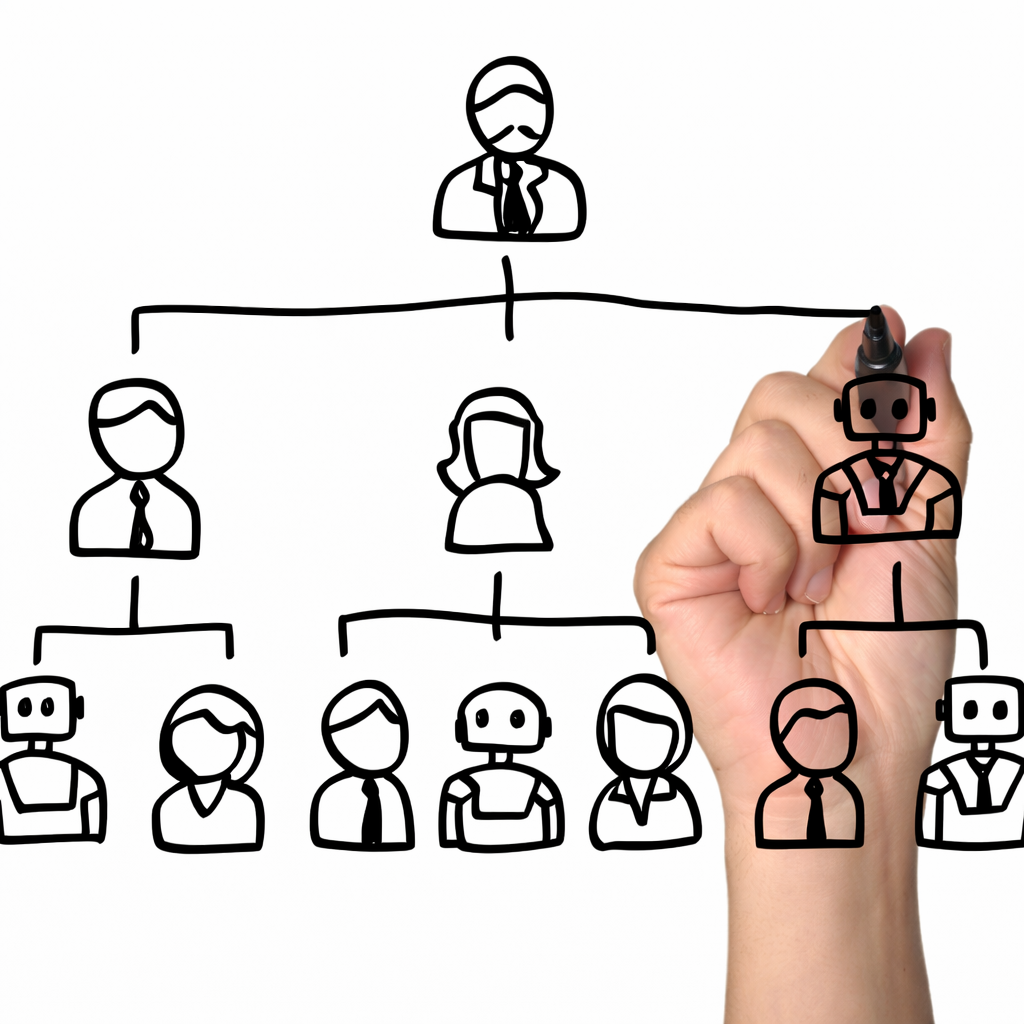
Everybody's talking about how AI is changing the tech industry. It seems obvious to me that AI is also going to change the social architecture of organizations.
How could it not?
Organizations as we know them today have evolved to be productive agglomerations of social apes, with all their specific demands and peculiarities. AI is a new kind of intelligence, capable of doing lots of work in similar ways to humans, but with quite different needs in terms of training, management, compensation, work-life balance, career progression, etc.
I recently spent some time coming up to speed on current theories of how organizations function, to think about how AI is likely to change them.
"How will AI alter every aspect of organizations" seemed a wee bit ambitious, so I decided to focus specifically on meetings.
Reasons:
- Meetings are a crucial part of how most organizations work.
- Everybody has direct experience with good/bad meetings, to the point where "what to do during boring meetings" is a lively topic of discussion on the interwebs.
- Running meetings is an important—top 5, probably—skill for managers and organizational leaders.
- Enough people care about meetings that there are multiple management books and pop-sci books about them.
- Automated note-takers have made meetings newly visible, measurable.
Changes in measurability + activity and outcomes that people care about? This is a good recipe for new technology and scientific advancement.
As a mini-experiment, I decided to timebox myself and see how much I could learn in half a day, using an AI-assisted lit review process.
Answer: with AI, a lot.
Here's what I did. First, I gave Claude bullet notes on aspects of meeting dynamics that I find interesting, and asked for a list of books on related topics. I also reached out to a few friends who are knowledgable about this stuff. (Thanks, Eugene!)
I asked Claude for 1-paragraph blurbs about all the books on the list. After a little back and forth, I picked a shorter list of books and asked Claude to give me a two-page summary for each one.
I read this carefully, noting ideas and questions in the margins. I went back to Claude with many of these questions—especially about methods and evidence for the various theories. Then I went deeper in a few specific areas that interested me.
- I spent some time with Weick's analysis of the Mann Gulch fire catastrophe. I skimmed this talk. I also used NotebookLM to convert this talk into a podcast {link resource}, which I ended up sharing with my kids at dinner. It led to a pretty decent discussion, which I consider a parenting win with pre-teens.
- I did some comparing and contrasting of the different theories, looking at overlap among concepts, the evidence they draw on, outcomes of interest, etc.
- I asked for chapter-level summaries of the two books that were the right combination of practically oriented and evidence-driven: The Business of Talk and The Surprising Science of Meetings. (Claude gave me "summaries" based on the table of contents, but helpfully informed me that it didn't have access to the actual content of the books, so it was guessing.)
- I ordered a copy of The Surprising Science of Meetings, which should arrive in a week.
At this point, I was running out of time, so I dictated some notes on what I'd learned, what questions were still open, and created a table.
| Book | Author | Year | Pages | Primary Purpose + Audience |
|---|---|---|---|---|
| The Meeting | Schwartzman | 1989 | ~290 | Anthropological study of what meetings actually do vs. what they're supposed to do. Organizational anthropologists and qualitative researchers. |
| The Business of Talk | Boden | 1994 | 272 | Conversation-analytic study of how organizations are constituted through talk. Organizational scholars and CA researchers. |
| Sensemaking in Organizations | Weick | 1995 | 231 | Theory of how people construct meaning from ambiguous organizational events. Organizational theorists and researchers. |
| Interaction Ritual Chains | Collins | 2004 | 439 | Grand sociological theory of how face-to-face encounters generate solidarity and emotional energy. Social theorists and advanced students. |
| Death by Meeting | Lencioni | 2004 | ~260 | Practitioner framework for restructuring meetings by type. Managers and team leaders. |
| Group Genius | Sawyer | 2007 | 288 | Popular science account of collaborative creativity and group flow. General readers and innovation-oriented managers. |
| Meetings Matter | Axtell | 2015 | 168 | Conversational skills for leading better meetings. Meeting facilitators and team leads. |
| Talk | Stokoe | 2018 | 288 | Accessible introduction to conversation analysis and practical applications. General readers and professionals. |
| The Surprising Science of Meetings | Rogelberg | 2019 | 192 | Evidence-based guide to meeting design and facilitation. Managers and L&D professionals. |
Overall, I came out with a good, starting understanding of what we think we know about meetings, and what evidence it's based on.
- My mental map of the space certainly isn't comprehensive, but it covers enough ground with enough coherence that I'm confident I'll be able to flesh it out further over time.
- I was very happy with learning this much in just a few hours. Doing the same thing when I was in grad school would have taken the better part of a week.
Observations
Here are my general observations coming out of this exercise. It'll take me more work to synthesize and decide exactly where to go next.
Notes on the process:
- A year ago, hallucination was a big enough problem that I wouldn't have trusted any of the chat bots to do this correctly. Now, the frontier models have improved enough that I don't worry nearly so much. That said, I did catch a few mistakes as I went along, which makes me wonder what else might have been hallucinated.
- Not a new idea, but---it struck me again how valuable it is to be able to consume information at different levels of granularity. I find myself increasingly aware of learning curves.
- I wonder about whether this type of process will be good or bad for book sales. After all, I was able to get a lot of the main ideas from each book without having to buy them. On the other hand, there's no way I would've purchased all these books anyway. I ended up buying one book, and I have a couple more on my maybe list. Without the lit review, would I have bought any of them?
Notes on the field:
- There are a ton of specific things that we can observe and measure within meetings. (See the list below.)
- However, we're not good at measuring the higher-level outcomes that seem most important in organizational dynamics: sensemaking (Weick) emotional energy (Collins), creativity (Sawyer), etc.
- Some of this might be because many of these authors are deliberately pushing back on "every meeting should have a goal"-type organizational theories, and theorizing about the things that matter besides productivity.
- There's a gap between academic research and applied practice. Most organizations has pretty strong disincentives to being transparent about their meeting practices and how those do/don't connect to productivity.
- Even with those caveats, I think the causal connection between what happens in meetings and overall productivity are still pretty murky. When you think about methodology, it's hard to imagine how this could have been done with high internal and external validity
- Net-net, this puts the field in what Kuhn would call a pre-paradigmatic state: a domain with interesting observables and subjective outcomes, linked by loose causal storytelling.
- It's going to be interesting to see how it develops.
Observables
- Who speaks, how often, and for how long
- Turn-taking patterns: who follows whom, interruptions, gaps
- Topic trajectories: what gets discussed, in what order, how closely it tracks the agenda
- Whether proposals get explicit responses or pass in silence
- How and when summaries/reformulations happen ("so what we're saying is...")
- Whether decisions are made explicitly or emerge through non-objection
- Participation distribution across the group (and its correlation with role/status)
- Post-meeting account divergence: do participants agree on what was decided?
- Decision implementation rate: do things decided in meetings actually happen?
- Decision recycling: how often the same issue gets "decided" again in a later meeting
- Leader self-assessment accuracy: the gap between how leaders rate their meetings and how attendees do
- Meeting recovery time: how long it takes people to get back to productive work after a bad meeting