Alignment is shifting from art to science

IMO, "do we have a shared mental model?" is one of the most powerful questions you can have in your mental toolkit.
It's crucial for engineering, design, branding, relationships, teamwork, science, law, economics, markets, war, etc.
It's the more practical cousin of the Turing Test. Not, "does my interlocutor possess intelligence," but "what can we get done together?"
I now ask this question about the agents I'm working with, many time per day. "Do this agent and I have a shared mental model of the problem we're trying to solve?"
This is crazy—one of the single strongest signs that AI is truly a new kind of intelligence, not just a stochastic parrot / token factory.
These are some of the main followup questions that I ask about alignment.
- What, exactly, makes me sure that we're aligned?
- What differences / gaps do we have?
- What's the quickest way for us to get aligned?
- Should I change my mental model? Do they need to?
- What examples / assumptions / etc. will get us there fastest?
- Does the other person know that we share this mental model?
- What actions does this level of shared-ness unlock?
When I'm in a meeting or conversation, there's usually a part of my brain that's asking these questions. This is true whether I'm with my family, my team at work, a customer, an investor—shared mental models play a very important role in all of these relationships.
Even in small talk with strangers/distant acquaintances, I'm interested in how they see the world. I often find myself asking: "When you say X, what do you mean?" Or "Can you give me a specific example of that?"
I call this part of my mind my "internal facilitator," in the sense of a "person assigned to lead or run a meeting or discussion, ensuring objectives are met and all participants' opinions are heard."
Subjectively, this feels a lot like an internal editor when I'm writing: a semi-conscious mental talk track that "I" choose how to respond to in the moment.
My internal editor wants consistency and conciseness in expressing ideas. The questions it asks often feel critical, constraining, cautious, step-by-step.
My internal facilitator usually feels much more playful, exploratory, open-ended, social. This quote from The Sword in the Stone captures it for me (emphasis mine.)
The Wart did not know what Merlyn was talking about, but he liked him to talk. He did not like the grown-ups who talked down to him, but the ones who went on talking in their usual way, leaving him to leap along in their wake, jumping at meanings, guessing, clutching at known words, and chuckling at complicated jokes as they suddenly dawned. He had the glee of the porpoise then, pouring and leaping through strange seas.
In everyday usage (not in the AI community), the word "alignment" gets used on at least two different levels. (HT to Raph D'Amico for highlighting this distinction.)
- "Do we have a shared mental model"?
- "Do we agree on what's important / valuable within that framework?"
I'm using alignment in the first sense. It's rare to achieve the second kind of alignment in a durable way without the first.
Within AI circles, "alignment" often has doomer connotations: "if humanity can't achieve 1 and 2 with superintelligence, we're screwed."
Right now, alignment is going through a scientific revolution.
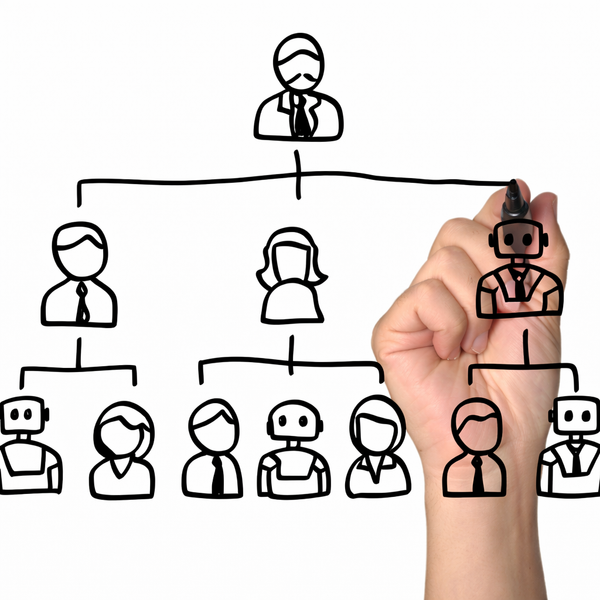
The question "do we have a shared mental model?" used to live almost exclusively in the social / behavioral world. The people who used to care most in practice were managers—humans with the job of getting humans on the same page. Their work was expensive, hard to scale, and almost impossible to run controlled experiments on, because every human interaction starts from a different place.
With LLMs, "how do we get to a shared mental model?" is becoming a technical, experimental question with a whole new level of precision and repeatability.
Shared mental models
(A list of Claude-assisted links + quotes)
Each link below connects to a domain where the concept of a shared mental model is central. Each entry includes a key paraphrase or short quote supporting the thesis, plus a recommended link.
Engineering / Software
Domain-Driven Design (Eric Evans)
Evans' entire framework rests on creating a "ubiquitous language" — a shared vocabulary between developers and domain experts, embedded directly in the code. When the team doesn't share a mental model of the domain, the software diverges from reality.
Eric Evans defined DDD as: focus on the core domain, explore models in creative collaboration between domain practitioners and software practitioners, and speak a ubiquitous language within an explicitly bounded context.
Best link: Martin Fowler's overview of DDD Also: Wikipedia — Domain-Driven Design
Design / UX
Don Norman — The Design of Everyday Things
Norman identifies three mental models: the designer's model, the user's model, and the system image (what the product actually communicates). Bad design happens when the designer's mental model ≠ the user's mental model. The entire discipline of UX is about closing that gap.
"Design is really an act of communication, which means having a deep understanding of the person with whom the designer is communicating." — Don Norman
"What makes something simple or complex? It's not the number of dials or controls or how many features it has: It is whether the person using the device has a good conceptual model of how it operates." — Don Norman
Best link: Don Norman quotes (Goodreads) Also: Wikipedia — The Design of Everyday Things
Economics / Game Theory
Schelling Focal Points — The Strategy of Conflict
Schelling showed that people can coordinate without communication — if they share enough cultural context to converge on the same "obvious" answer. A focal point is a shared mental model that doesn't need to be spoken aloud.
Schelling concluded that people can often align their expectations with others, if each knows the other is trying to do the same, by finding a mutually recognized signal in the common situation.
Best link: Wikipedia — Focal point (game theory) Also: AEA — Can Schelling's focal points help us understand negotiations?
Keynes' Beauty Contest — The General Theory
Keynes compared the stock market to a beauty contest where you don't pick the prettiest face — you pick the face you think others think is prettiest. Markets are shared mental models of shared mental models, recursively.
"We have reached the third degree where we devote our intelligences to anticipating what average opinion expects the average opinion to be." — Keynes
Best link: Chicago Booth Review — Keynes's Beauty Contest Also: Wikipedia — Keynesian beauty contest
Science / Epistemology
Thomas Kuhn — The Structure of Scientific Revolutions
A "paradigm" is the shared mental model of a scientific community — the theories, methods, assumptions, and values that define what counts as a valid question and a valid answer. Scientific revolutions happen when the shared model breaks down.
Kuhn defined a paradigm as "the entire constellation of beliefs, values, techniques, and so on shared by the members of a given community."
Best link: Stanford Encyclopedia of Philosophy — Thomas Kuhn Also: Wikipedia — The Structure of Scientific Revolutions
Relationships / Psychology
Gottman's Love Maps
Gottman's research found that the foundation of a healthy relationship is a detailed "love map" — a mental model of your partner's inner world: their fears, dreams, stresses, and preferences. Couples who maintain these maps weather crises far better.
"Emotionally intelligent couples are intimately familiar with each other's world... They remember the major events in each other's histories, and they keep updating their information as their spouse's world changes." — paraphrased from Gottman
Best link: The Gottman Institute — Build Love Maps
Aviation Safety / Teamwork
Crew Resource Management (CRM)
CRM was born from aviation disasters where the pilot and copilot had different mental models of what was happening — and the hierarchy prevented the gap from being closed. The entire framework is about building and maintaining a shared situational picture.
The FAA's CRM advisory circular states: "SOPs define the shared mental model upon which good crew performance depends."
The 1977 Tenerife disaster — 583 deaths — was driven in part by a first officer's inability to effectively challenge the captain's model of the situation.
Best link: FAA Advisory Circular on CRM (PDF) Also: Wikipedia — Crew Resource Management Also: SKYbrary — CRM overview
Law
"Meeting of the Minds" (Contract Law)
Contract law literally requires a "meeting of the minds" (consensus ad idem) — a shared understanding of terms. Without it, there is no enforceable contract. Oliver Wendell Holmes called it a useful fiction; modern law evaluates it through objective expressions rather than subjective intent.
"Meeting of the minds refers to mutual assent by all parties to the formation of a contract. For a meeting of the minds to occur, the parties must agree to the same terms, conditions, and subject matter." — Cornell Law Institute
Best link: Cornell LII — Meeting of the Minds Also: Wikipedia — Meeting of the Minds
Marketing / Branding
Ries & Trout — Positioning: The Battle for Your Mind
Positioning is explicitly about occupying a space in the prospect's shared mental landscape. A brand isn't what you make in a factory — it's a mental model you install in the consumer's mind, and it only works if many people share it.
"Positioning is not what you do to a product. Positioning is what you do to the mind of the prospect." — Ries & Trout
"Owning a position in the mind is like owning a valuable piece of real estate." — Ries & Trout
Best link: Al Ries — Positioning (official site) Also: Branding Strategy Insider — Great Moments in Marketing
War / Strategy
John Boyd's OODA Loop
Boyd's framework isn't just about speed — it's about disrupting the enemy's mental model. The goal is to act in ways that create a widening gap between the adversary's internal picture and reality, until they become paralyzed by confusion.
Boyd described the winning strategy as the ability to "observe, orient, decide and act more inconspicuously, more quickly, and with more irregularity" than the opponent — thereby disrupting their orientation and preventing effective action.
"The ability to operate at a faster tempo or rhythm than an adversary enables one to fold the adversary back inside himself so that he can neither appreciate nor keep up with what is going on." — Boyd
Best link: Farnam Street — John Boyd and the OODA Loop Also: Art of Manliness — The Tao of Boyd Also: Commoncog — Much Ado About the OODA Loop
Education
Constructivism (Piaget & Vygotsky)
Piaget showed that learning is literally constructing mental models — "schemas" — of the world. Children don't absorb knowledge passively; they build internal representations and revise them when reality doesn't fit. Teaching, then, is the act of aligning the student's model with the teacher's (and with reality). Vygotsky added the social dimension: the "zone of proximal development" is where a learner's model can be extended through collaboration with someone who has a better one.
Piaget's theory holds that learning is a process of construction, where the thing being constructed is the child's internal model of the world. This foundational assumption is called "constructivism."
Piaget described schemas as the basic building blocks of intelligent behavior — a way of organizing knowledge.
Best link: Wikipedia — Constructivism (philosophy of education) Also: Simply Psychology — Piaget's Theory
Communication / Conflict Resolution
Nonviolent Communication (Marshall Rosenberg)
NVC's core insight is that most conflicts arise because people are operating on different unspoken models of what happened and why. Rosenberg's four-step process — observation, feeling, need, request — is essentially a protocol for surfacing and aligning mental models between people in conflict. The first step alone (separating observation from evaluation) forces both parties to check whether they even agree on the facts.
"Analyses of others are actually expressions of our own needs and values." — Rosenberg
"Most of us grew up speaking a language that encourages us to label, compare, demand, and pronounce judgments rather than to be aware of what we are feeling and needing." — Rosenberg
Best link: Rosenberg quotes (Goodreads) Also: PuddleDancer Press — NVC Quotes
Epistemology
"The Map Is Not the Territory" (Alfred Korzybski)
Korzybski's maxim is the meta-warning that applies to every other entry on this list: your mental model is never reality itself, and confusing the two is the root of most errors. Every shared mental model is still just a map — useful, necessary, but incomplete. The question "do we share a mental model?" must always be followed by "and is our shared model actually close to reality?"
"A map is not the territory it represents, but, if correct, it has a similar structure to the territory, which accounts for its usefulness." — Korzybski
Korzybski held that many people confuse conceptual models of reality with reality itself — maps with territories.
Best link: Farnam Street — The Map Is Not the Territory Also: Wikipedia — Map–territory relation Also: LessWrong — The Map Is Not The Territory
Safety / Organizational Theory
High Reliability Organizations (Karl Weick)
Weick studied how organizations that cannot afford failure — aircraft carriers, nuclear plants, emergency rooms — actually manage to sustain near-zero error rates. His answer: "collective mindfulness," a shared, continuously updated situational awareness. HROs succeed because their members resist oversimplification, defer to expertise over rank, and invest heavily in maintaining a shared picture of what's happening right now. When that shared picture breaks down, disasters follow.
Sensemaking is "a collaborative process of creating shared awareness and understanding out of different individuals' perspectives and varied interests."
"Your beliefs are cause maps that you impose on the world, after which you 'see' what you have already imposed." — Weick
HROs take "deliberate steps to create a more complete and nuanced picture of what they face and who they are as they face it."
Best link: Wikipedia — Sensemaking Also: Wikiquote — Karl E. Weick Also: High-Reliability.org — Weick & Sutcliffe