Practical tips for getting on the same page with AI

Over the last few months, I've gone through a shift in how I interact with AI agents—especially coding agents, Claude/ChatGPT chats, and Cowork sessions.
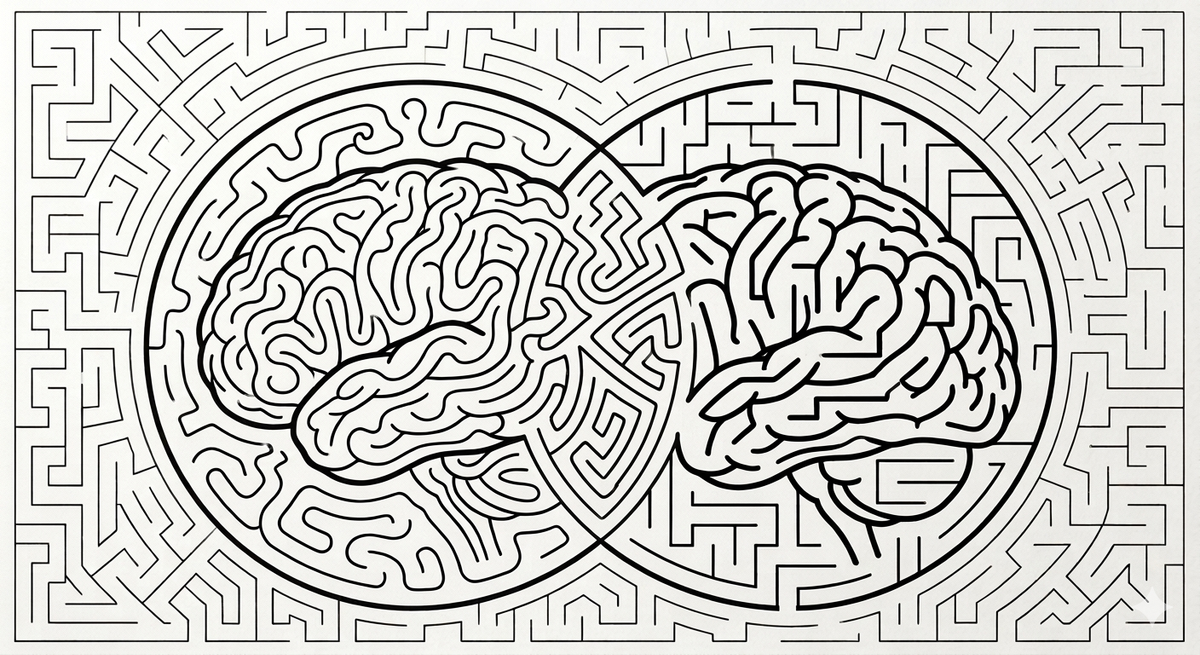
I'm no longer thinking primarily in terms of instructions. Instead, I'm thinking in terms of a more abstract thing: "shared mental alignment with the problem space." I'm trying to understand whether my mental model is complete, whether its mental model is complete, and whether they're the same.
Basically, "do we understand the moving parts of the problem we're trying to solve, and do we understand it the same way?"
Once you internalize that framing, the whole nature of the conversation shifts. You stop evaluating the AI's output as right or wrong, and start treating it more like a collaborator you need to sync up with. What did it pick up on? What did it miss? What did it surface that you hadn't thought of? The goal isn't simply extraction or execution—now you need to think about alignment, too.
Practical tips
(These are collated notes from several recent conversations on this topic.)
Use voice instead of typing
I usually dictate my part of the conversation using a voice-to-text tool like Super Whisper or the voice mode in ChatGPT. (I almost never have the agent respond via audio unless I'm driving.)
Part of this is just speed: like most people, I speak at roughly double the speed I type. Beyond that, I find that talking also helps me bypass my internal editor and share more context with the agent.
Don't be afraid to ramble
When I first started using AI dictation, I would pause to gather my thoughts before starting dictation. Over time, I've found that it's usually better to just dive in and start talking. This leads to a lot of semi-embarrassing rambling, but what's to be embarrassed about?
Rambling takes very little time—usually less time than it would have taken to form my ideas silently—and it gives the agent more context about how I'm thinking about the issue at hand. If the rambled version is truly bad, I can always add a followup prompt, edit the text before sending, or (worst case) delete it and start over.
Increasingly, I find myself trusting the agent to handle more and messier context. It's a far cry from the carefully curated prompts that I was writing a year ago.
Get on the same page to start
I see a lot of people who dive in immediately with questions or do-this-now type tasks. Sometimes that works for simple, unambiguous things. More often, it's helpful to get on the same page first.
At the end of a rambling description: "Does that make sense? Play back the key points and let me know if anything is unclear."
When starting a new feature: "Before we write any code, help me research the codebase and create a spec together."
During planning: "Do you have any questions for me?" "Is anything about this proposal unclear?"
Over time, I've found myself re-using certain conversational modes: brainstorm, compare and contrast, anticipate followup questions, polish. In some cases, I've converted these into slash commands or skills. More frequently, they're just muscle memory in the way I talk with agents.
Meeting transcripts are rich context
I often paste full meeting transcripts into chat sessions so the AI can "sit in on the meeting" rather than work from a thin summary.
Actually, my first move is usually to ask for a summary. If it's mostly right, that's good signal that the bot has good context and is ready to move on to deeper work.
Also, a summary makes it much easier to zero in on specific parts of the meeting: "Let's go to the third topic in your summary. Using that section of the whole transcript, please extract..."
Brainstorm together
- "What alternatives should we consider?"
- "What do you think of this direction? Are there important angles we haven't covered yet?"
- "Are there conditions under which this approach would get us into trouble?"
I've found that when I ask AI for alternatives, it will basically always give me something. And I can judge how good your proposal is based on how weird or crazy those alternatives are.
AI brainstorming helps me explore the problem space, and pressure test my own assumptions.
AI sycophancy is the default behavior for most consumer chat products. Asking for alternatives is a good way to counteract this tendency, and often learn something new in the process.
Iterate and refine
When I describe how I use AI dictation, people sometimes push back with "Yeah, but I think by writing, not by talking. Rambling doesn't make me think clearly."
I completely agree—and I find that I can usually get there fastest in stages. When writing an important doc, I'll usually start by rambling or extracting notes from a meeting transcript. Then, I ask the agent for its summary, and go back and forth refining.
One thing that I don't love about current chat interfaces is that they don't do much to provide a clean experience for directly editing and also chatting. Usually, I'll have the bot create a markdown file in a folder where I can edit it. From there, the conversation is a combination of edits and discussion of those edits.
- "I just made some revisions to the second section. Please review and describe how these change the flow of the doc."
- "I don't love the transition into the fourth section. It feels like it should be more about X, instead of Y. Thoughts?"
- "I think we're missing some important points in this list, like A and B. Zoom out and brainstorm other things we might include there. I'll tell you which ones to include."
- "Check my latest changes to the doc. Any feedback for me?"